
Most footballers spend a lot of time thinking about the perfect pair of boots to buy.
But then treat the layer that sits between the foot and the boot - the sock - as an afterthought.
This is a huge mistake most amateur players make.
You see, your football sock isn’t just part of your kit. It’s the very thing that influences stability, comfort, and control the most. And choosing the right football sock for your feet deserves equally careful consideration.
The challenge is that there’s no single type of ‘football sock. You’ve got long traditional match socks, mid-calf performance socks, grip socks, compression models, lightweight technical fabrics, and hybrid setups worn with sock sleeves.
So, how do you choose what football sock’s best for you?
The Three Broad Sock Setups in Modern Football
Broadly speaking, most footballers fall into 1 of 3 camps when it comes to choosing their football socks:
-
Traditional long match socks - typically, this sock is cotton heavy sock, designed for uniformity and kit regulation compliance, rather than any specific performance benefits. These are the standard team-issued sock most players grow up wearing and grace most amateur football pitches. They do the job, of course, but aren’t engineered with high-performance biomechanics in mind.
-
Standard crew or mid-calf socks - these are often lighter and more breathable than your traditional long match socks, designed for comfort underfoot. A good crew sock may offer improved moisture management and compression (especially compared to cotton based socks), but they’re still not always optimised specifically for football movement patterns.
-
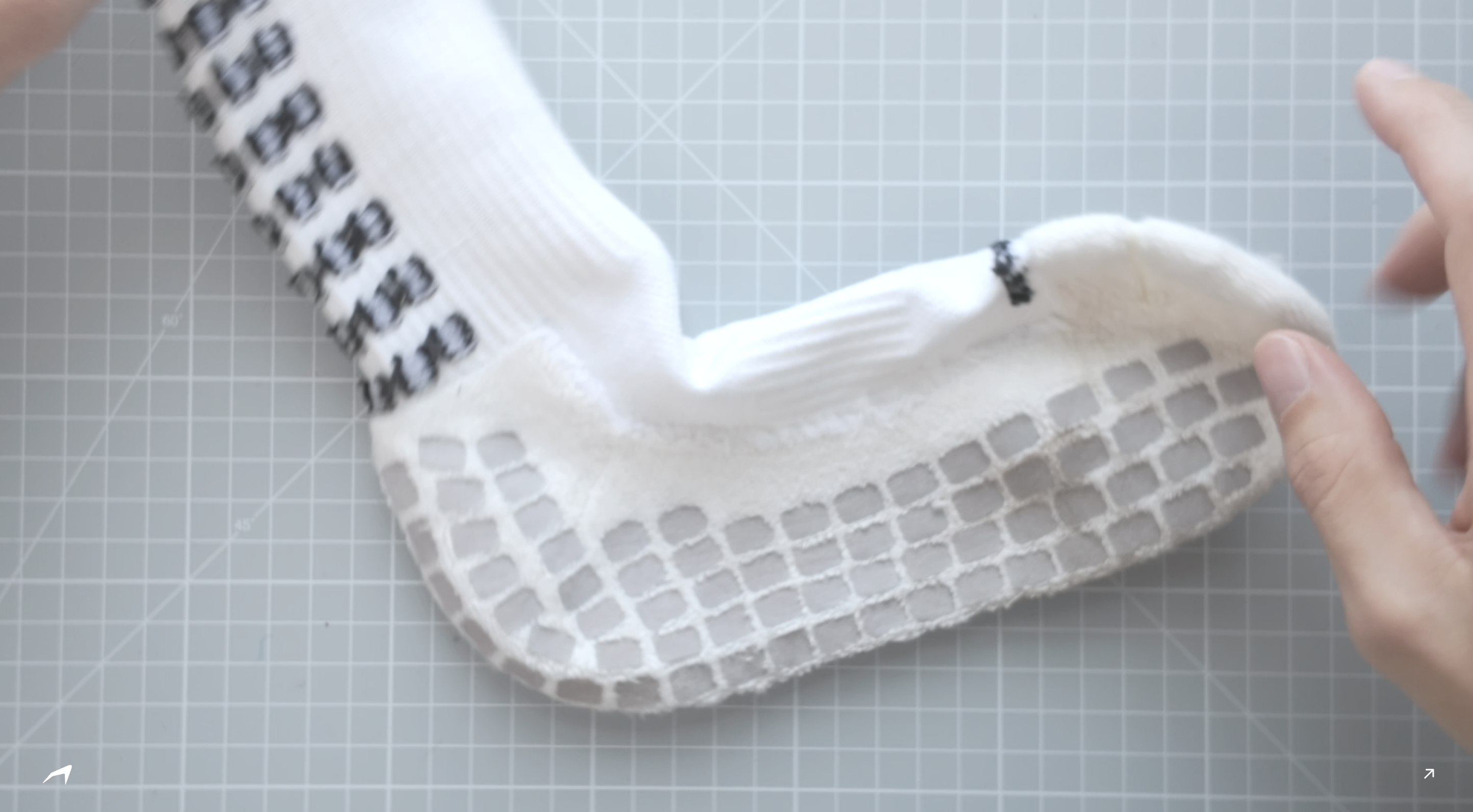
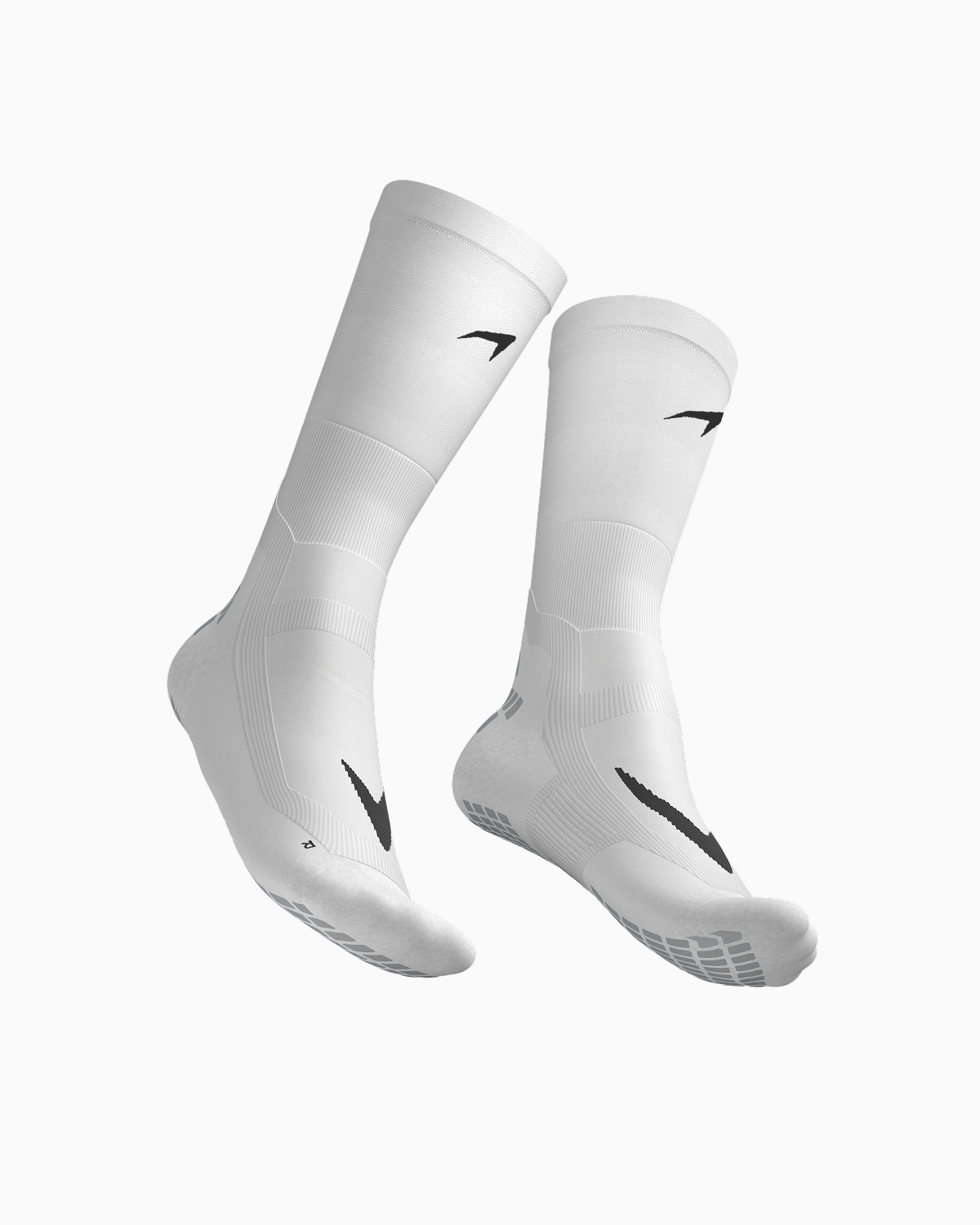
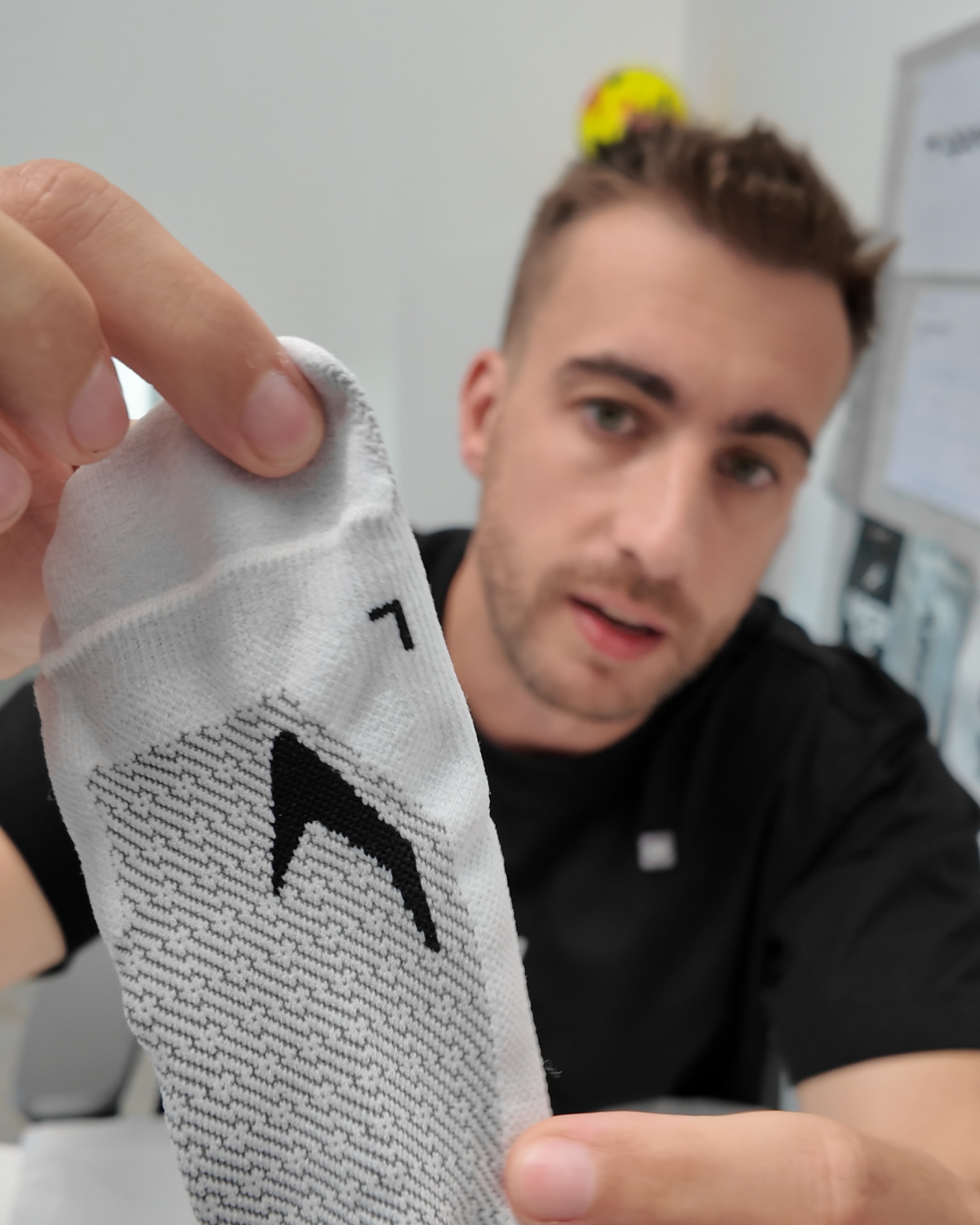
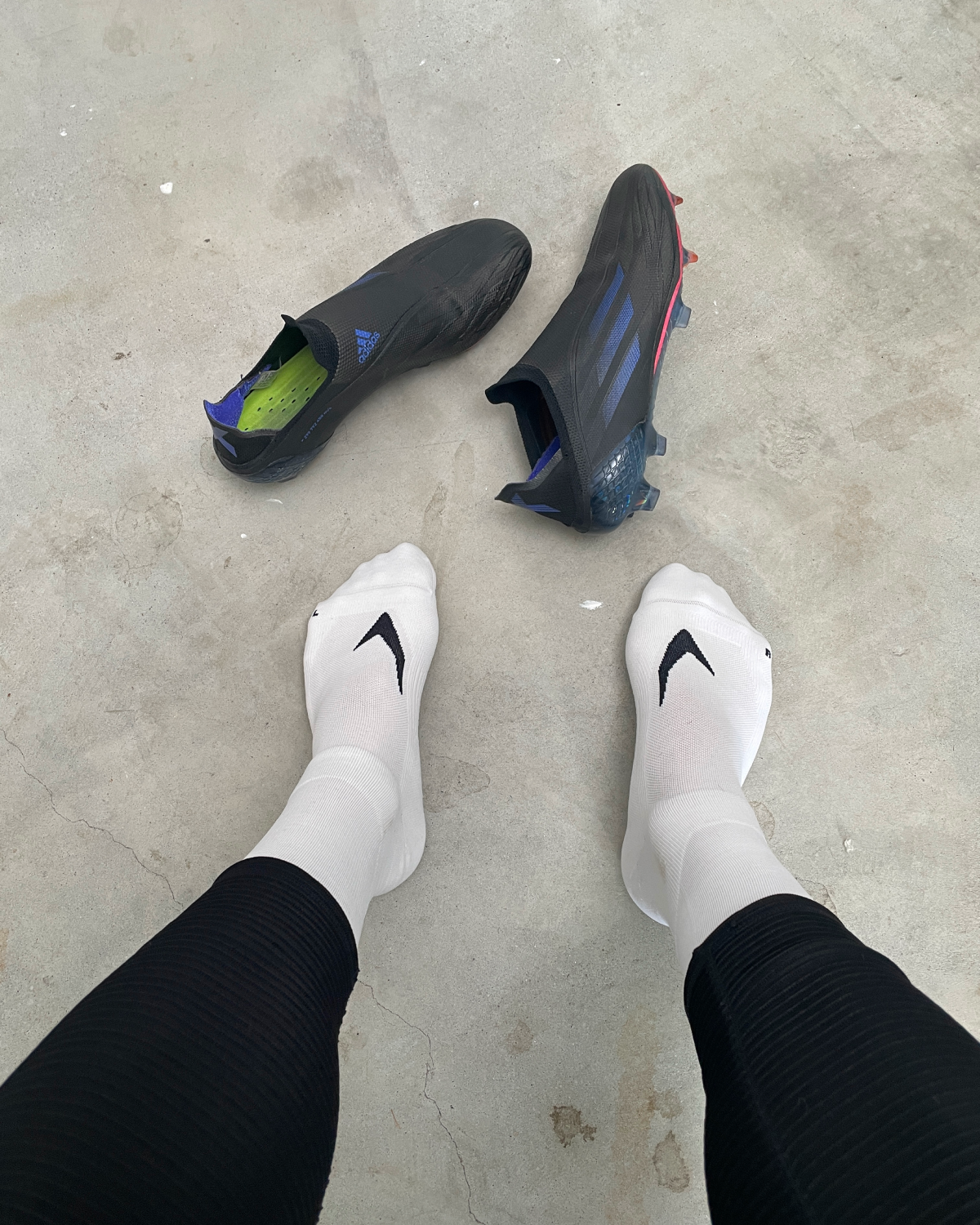
Grip socks - grip socks in football are often worn with a sock sleeve over the top to comply with kit/league rules. They’re visually similar to your standard crew sock, but are designed with grip pads underfoot, structural compression to keep the foot in place, and higher-quality materials (to help with things like blister prevention, moisture wicking, and stuff like that).
Each of these setups solves a different problem. The right option for you may not be the right option for someone else. So the key is understanding which variables matter most to you so you can find the right football sock setup before your next match.

Variable 1: Stability
The first variable you should consider when choosing a football sock is internal movement.
Football involves a lot of quick/sharp movements (like sprinting, changing direction, shooting etc.), and even a small amount of slippage inside the boot can negatively impact how well those movements are executed.
Some players never notice it. Others feel it immediately.
Your traditional cotton socks allow for more internal movement, as they prioritise comfort and elasticity over structural lockdown. Whereas performance grip socks, for instance, reduce that movement by placing sticky grip pads under the foot or through compression architecture (e.g. see the Apex PRO 3.0 exoskeleton for a sock that does a great job of this).
If you’re the sort of player that experiences instability, blisters or needs to be quick on their feet, then your sock choice may play an important role.
Variable 2: Thickness & Fit
Another important variable is your sock-boot pairing.
If your boots are close fitting / low-volume, then using a thicker or more cushioned sock may feel pretty restrictive. Alternatively, if your boots are slightly looser, a lightweight + thin sock may amplify internal movements.
The point is that sock thickness changes volume inside the boot. A lot of pro footballers prefer everything to be as lightweight and responsive as possible, creating a tight and secure connection between the foot and boot with minimal excess space. But, again, that’s not true for everyone.
Different sock compression also changes how the foot sits inside the sock and how much the material stretches under load. You may prefer your foot being snug inside your sock for increased proprioception, or you may value a softer, more cushioned feel that reduces pressure and impact over longer periods of play.
Variable 3: Moisture, Surface & Environment
Not everyone plays football under the same conditions.
You may play in very wet or very dry conditions. Maybe you play on grass, or artificial turf, or indoor courts.
Each of these surfaces and environments massively affects how material behaves and the sort of sock you should be wearing.
For example, cotton-based socks will absorb moisture and become heavier over time, which isn’t ideal if you live somewhere that rains a lot or if you sweat a lot. Synthetic performance blends, on the other hand, are far better at wicking sweat away and maintaining their structure under wet conditions.
If you spend a lot of time playing football on artificial grass, you want socks that are more durable and abrasion resistant. And if you play in colder climates, you may potentially prefer thermal regulation more than minimising sock weight.
Variable 4: Playing Style & Position
The best sock choice for you also depends on the sort of player you are.
A winger who relies on rapid acceleration and quick dribbling places different demands on their socks compared to a centre-back who experiences more lateral load and aerial duals.
A midfielder may potentially opt for more longer-term comfort and blister prevention, whereas an explosive forward may want a little more responsiveness and lockdown.
So, finding the right football sock requires a careful examination of how you move (or want to move) on the pitch.
Other Variables: Age, Gender & Personal Factors
There are a few other individual factors that matter too.
Age is one of them. If you’re a younger player (especially if still developing physically) you may prioritise comfort and blister prevention over aggressive foot lockdown. Your feet are still adapting to load, and overly rigid compression could feel too restrictive. However, more experience of elite players may order a tighter, more performance focused setup.
Gender’s another important factor. On average, women tend to have narrower heels relative to forefoot width, which can affect how a sock locks into the midfoot. So if you’re able to find a gender specific sock that matches your foot profile, then do so.
Finally, there are smaller but still meaningful factors that you may wish to consider:
-
Injury history (ankle stability, plantar fasciitis, chronic blisters)
-
Sensitivity to pressure
-
Training volume vs match intensity
-
Personal preference
Ultimately, the best football sock is one that aligns with your body and the way you move.
The Best Way to Choose Your Perfect Football Sock
There are a lot of variables to take into account when choosing the best sock for you, and it’s easy to feel overwhelmed.
So, to make the process easier, we build a short Football Sock Quiz that matches you to the setup most aligned with your playing style, surface and fit preferences.
It takes a couple of minutes to complete and removes all the guesswork too.