
Football is often framed as a contact sport.
But, while football’s physicality makes the sport appear high-risk at times, injury data shows that the majority of footballing injuries don’t happen from being tackled.
They happen during movement (sprints, accelerations, turns, etc.).
Understanding this distinction is important for players because it shifts how we should be thinking about injury prevention and performance.
Research on Causes of Football Injuries
A study analysing injury patterns in competitive footballers found that injuries occurred at a rate of 4.5 injuries per 1000 hours of football across a season.
Interestingly, there’s a big difference in injury rates when we separate training from match day.
Match injury rates were at 14.2 injuries per 1000 hours of football, compared to 2.3 injuries per 100 hours of training. In other words, injury risk during matches is ~6 times higher than during training.
This finding is consistent with decades of sports science research that says the most dangerous moments in football occur during high-intensity and unpredictable actions under competitive pressure.
The Most Common Football Injuries
The same study also said that 94% of all injuries happen in the lower half of the body.
This probably isn’t too much of a surprise, but the distribution of those injuries is interesting: the most commonly affected areas were the thigh (25.8%), ankle (19.3%) and the knee (13.3%).
Basically, the majority of football injuries occur within the entire kinetic chain responsible for producing and absorbing force during movement.
Every sprint/tackle/jump/shot begins with force travelling through the ground, into the foot, up the ankle and through the leg.
When instability occurs at any point in this chain, the structures above it must compensate.
For example, a slightly unstable plant foot during a change of direction can increase rotational stress at the ankle or knee. Repeated hundreds of times over a match, those small mechanical inefficiencies can accumulate into muscle strains or tendon overload.
This is why so many football injuries occur in the thigh, ankle and knee. These are the primary joints and muscle groups responsible for generating and controlling force during high-speed movement.

Non-Contact Injuries
The most surprising insight from all of this is that most football injuries actually happen with zero contact between players.
The mechanical stress on the lower limbs from sprinting and rapidly changing direction is often enough to cause its own injury. With the majority of non-contact injuries (78.9%) being muscle and tendon injuries.
During a match, players repeatedly accelerate, decelerate and move from side to side. Each of these actions places a huge mechanical load on the muscles, tendons and joints of the lower limb. The hamstrings must quickly generate power when you run. The calf and ankle stabilises the foot. And the knee manages rotational forces when you change direction.
Under these conditions, your body is constantly managing and redistributing force.
So, if you have even a tiny amount of inefficiency in how that force travels through the kinetic chain, you’ll increase mechanical stress and (eventually) injure yourself.
Preventing Injury
The key takeaways is that injury prevention in football is largely about managing mechanical load and movement efficiency.
This means working on strength training, sprint mechanics, mobility and proper conditioning.
But, it also means ensuring the body interacts with the ground as consistently as possible.
This is why equipment choices are important for pro footballers. While football boots are designed to maximise traction between the studs and the ground, it’s important ton think about the friction interface inside the boot too. If the foot shifts during movements on the pitch, some of that force generated by the body will be absorbed internally instead of transferring cleanly into the ground.
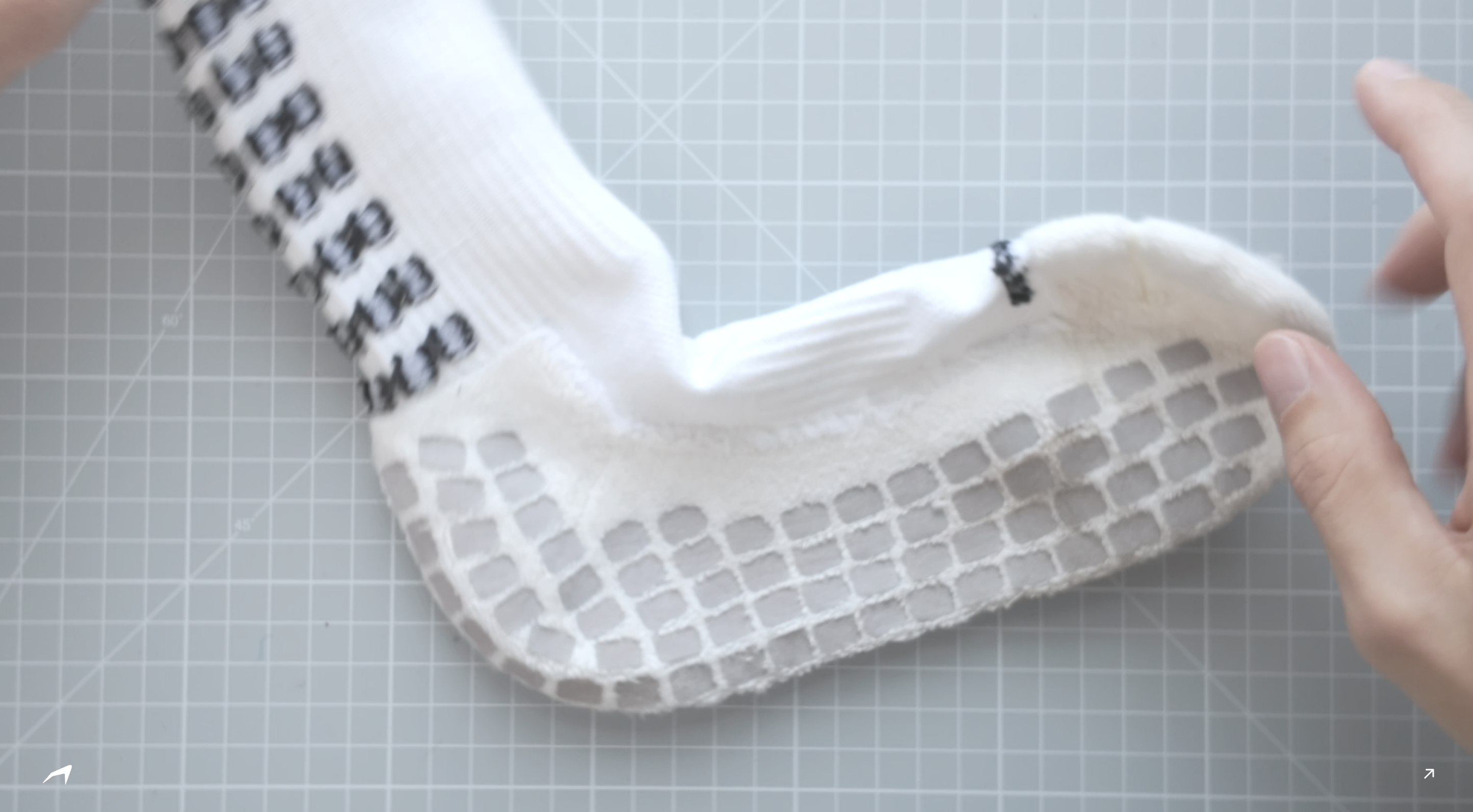
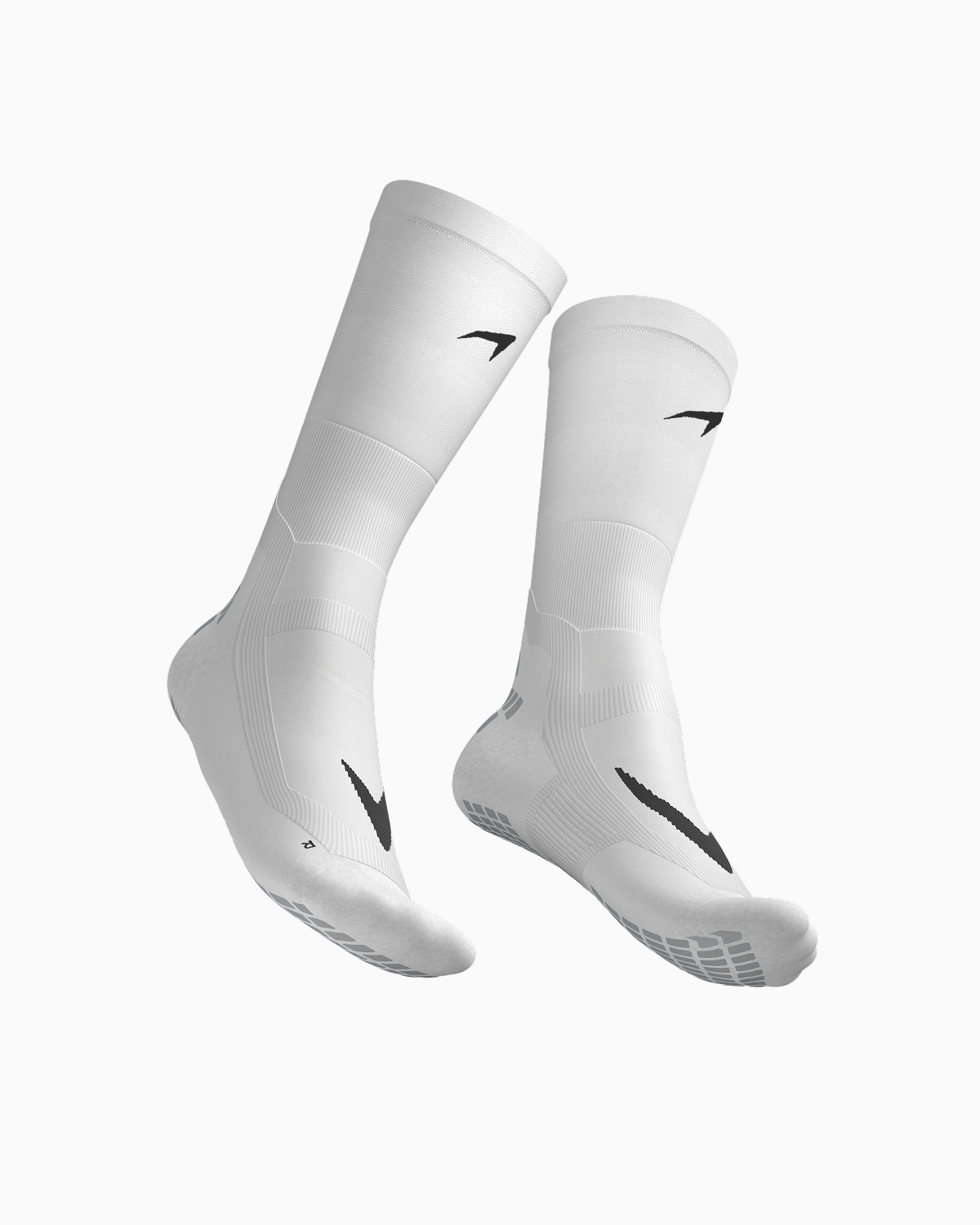
Grip socks exist to address that specific problem.
By increasing the grip inside the boot, they help reduce internal slippage and create a more stable platform for running and striking the ball. And while they’re not a substitute for a good boot fit, they can remove instability and inefficiencies that ultimately result in injury.
If you want to find the perfect pair of grip socks, we highly recommend the Apex PRO 3.0 grip socks or, if you prefer, you can get a personalised recommendation here.