
On paper, football is an endurance sport.
A professional player will typically cover 10-12km in a 90 minute match. The majority of which is performed at a low-to-moderate intensity.
But, football is not decided on paper.
Within those 10-12km, sprinting makes up to 11% of the total distance covered, with elite players performing ~10-20 high speed actions per match. These actions are rare, brief and metabolically costly. But, they’re also often decisive.
In fact, a 2012 study showed that a large proportion of goals are preceded by straight-line sprints, particular in counter-attacks and fast breaks.
Football, then, is a sport where the most important moments occur at the highest speeds, for the shortest durations, under the greatest fatigue.
Are You Training Speed Properly?
Despite the tactical and physical sophistication of the modern game, there’s plenty of evidence to suggest that players may be systematically underprepared for the demands of sprinting at maximum velocity.
Take this 2022 study from the Journal of Strength & Conditioning Research, which looked into how fast elite youth footballers actually run in different contexts (e.g. in matches, structured sprint drills, and training games).
It found that players only reached their highest spring speeds during dedicated sprint tests and sprint training drills. Whereas in matches and training games, peak speeds were far lower:

For instance, small-sided games (which are frequently used in modern training for their tactical and conditioning benefits) exposed only ~60% of a player’s true maximum sprint velocity.
In other words, the environments most commonly used in football training rarely expose players to their true top speed.
What Pro Clubs Get Wrong About Speed
Many pro clubs now use GPS and other sensors to monitor training and match load. (StatSports is one such company that supplies pro clubs).
These systems often measure player movement into different speed zones (like walking, jogging, running, and sprinting). While there’s different ways it can do this, one of the most common techniques is to use match-derived peak velocity.
In other words, it categorises your movement speeds based on the fastest speed you ran in the match.
But, there’s a key issue with this: match-derived peak speed is often not your true max speed.
Because of this, if a player doesn’t reach their true max speed in a match then:
- High-speed running zones are misclassified
- Sprint load is over or underestimated
- Fatigue and injury-risk models are distorted
- And training prescriptions are based on inaccurate baselines
This is why a growing number of clubs are shifting towards individualised speed profiling, using dedicated testing to establish true max velocity and personalised training loads.
Two Key Takeaways for Pro Footballers
1. Small-sided games are not speed training
Small-sided games have become a cornerstone of modern football training. They offer tactical realism and allow you to repeat technical actions within a constrained space.
But from a sprint-performance perspective, they have a fundamental limitation: they don’t provide the neurochemical stimulus needed to develop or maintain max sprint speed.
The reason is that to achieve your top sprinting speed a distinct set of physiological and biomechanical qualities is required:
- High neural drive and motor unit recruitment
- Tendon stiffness and elastic energy storage
- Limb stiffness and ground contact mechanics
- Horizontal force production and sprint kinematics
These qualities require high-intent, high-velocity exposure over sufficient distance - typically 30-50 metres or more.
Without deliberate exposure, your sprint speed can actually begin to decline even if you’re a highly conditioned player.
To put it bluntly, you may be an aerobically fit and technically proficient player, yet still lose your top-end speed.
2. Prepare for moments that decide matches
Modern football is increasingly defined by transitions.
A winger breaking the defensive line, a full-back recovering 40 metres to stop a counter, a centre-back sprinting to cover space behind a high line - these actions often happen over 30–40 metres at near-max velocity.
So, from a performance perspective, preparation for football must include training fro these critical in-game moments where short, high-intensity actions disproportionately influence match outcomes.
This includes things like:
- Maximal 0–10 m acceleration
- Exposure to high-speed sprinting
- Repeated sprint resilience
- Structural tolerance to high mechanical loads
The 11% of football that involves sprinting may be rare, but it’s often decisive.
Preparing yourself for these moments is, therefore, fundamental.
Marginal Gains at Max Speed
When sprinting at max speed, performance is dictated by fine margins. Small inefficiencies compound quickly.
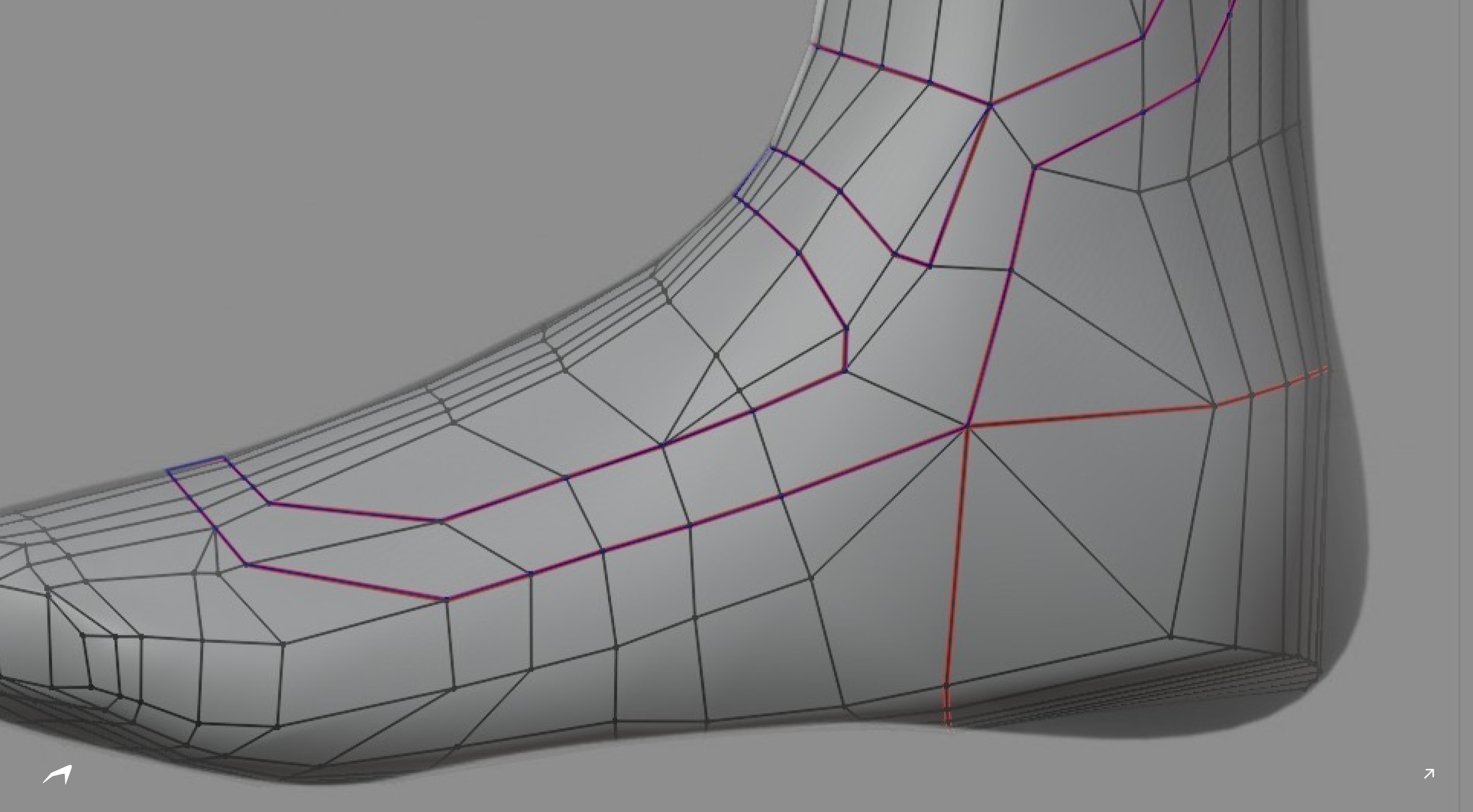
In particular, the foot-boot interface is a critical but often overlooked component of the kinetic chain.
During sprints, the foot needs to transfer a lot of force to the ground in very short contact times. So, any internal movement between the foot and the boot can introduce inefficiencies.
From a biomechanical standpoint, the goal is to maximise foot-boot coupling so the force you generate is transmitted cleanly to the ground.
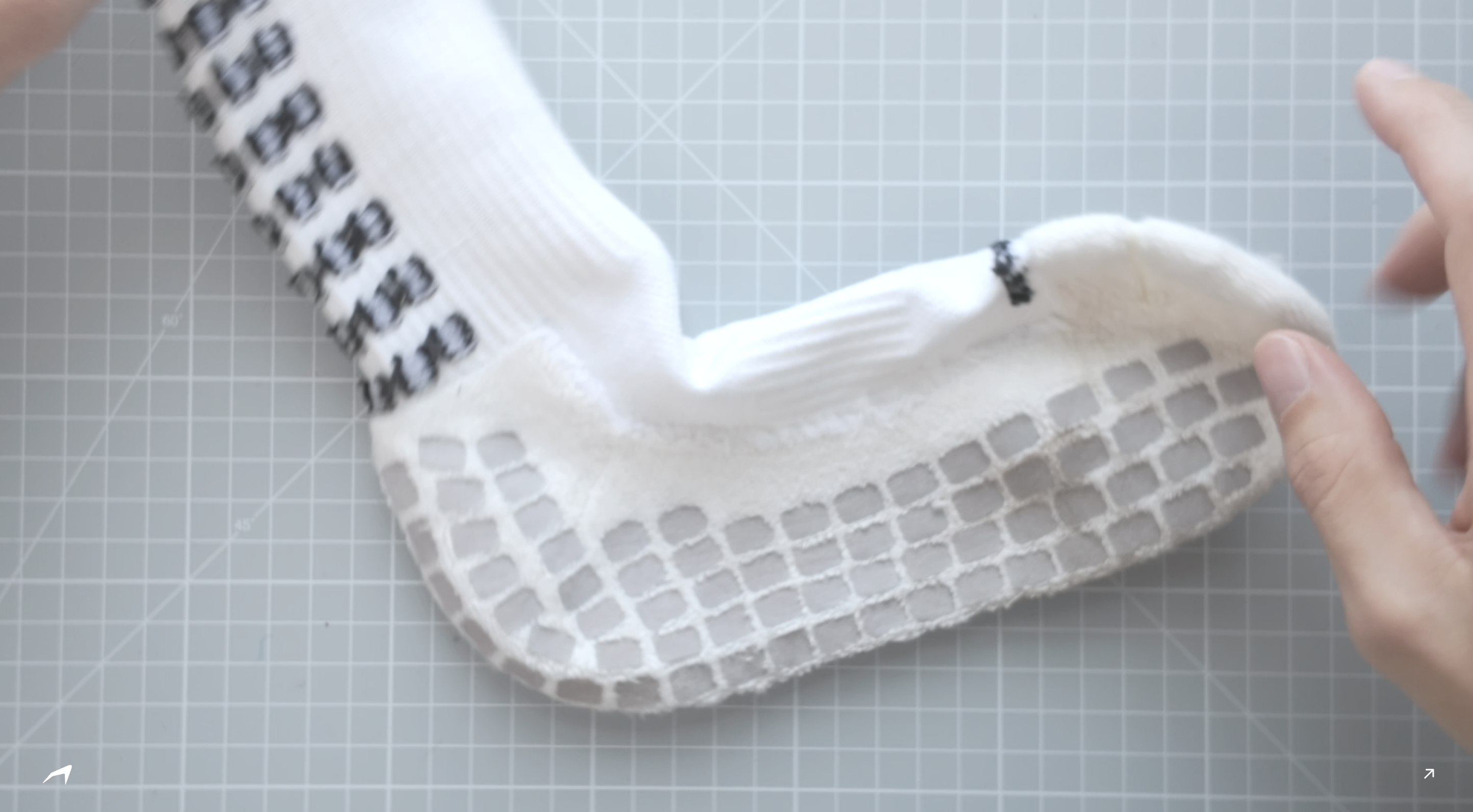
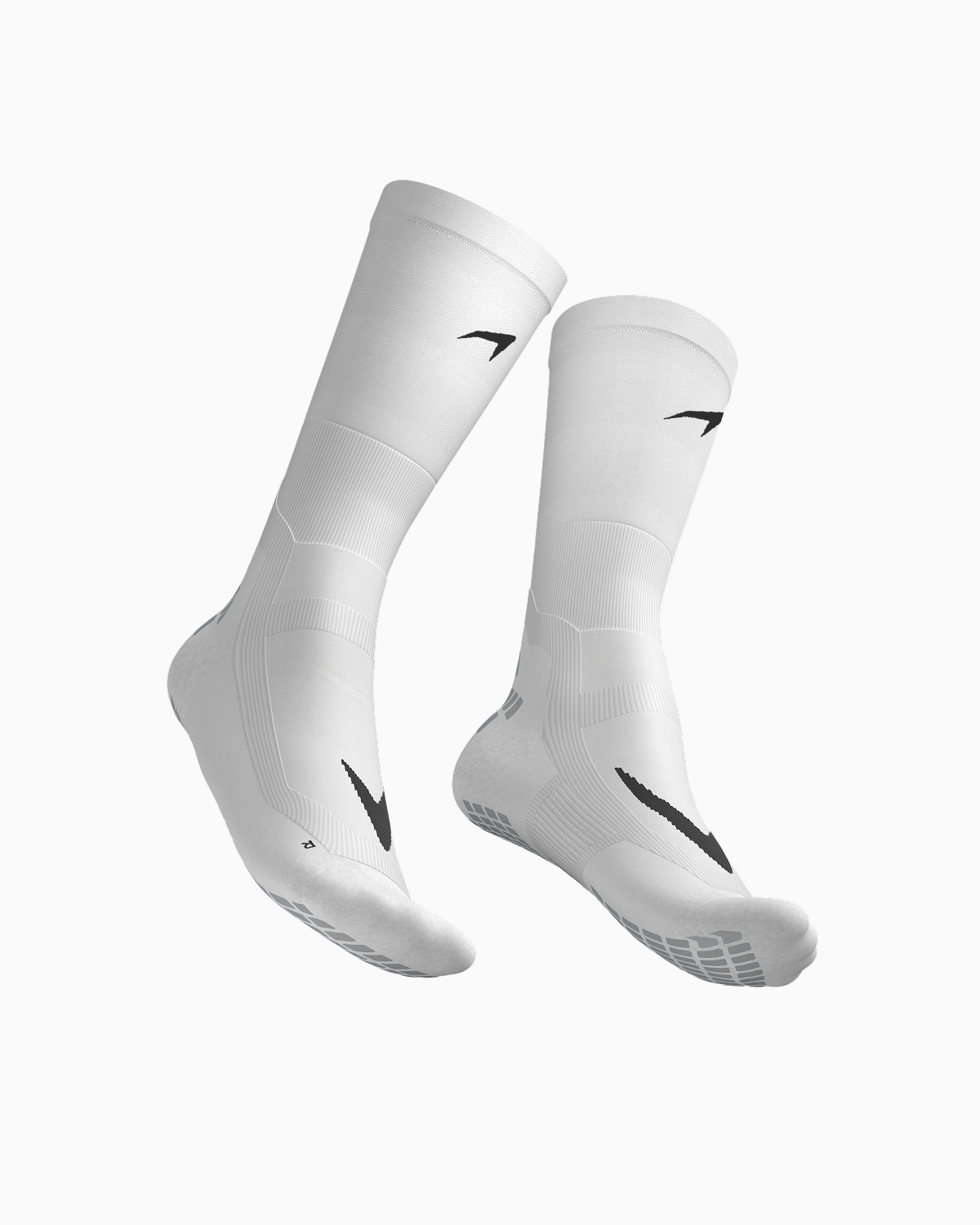
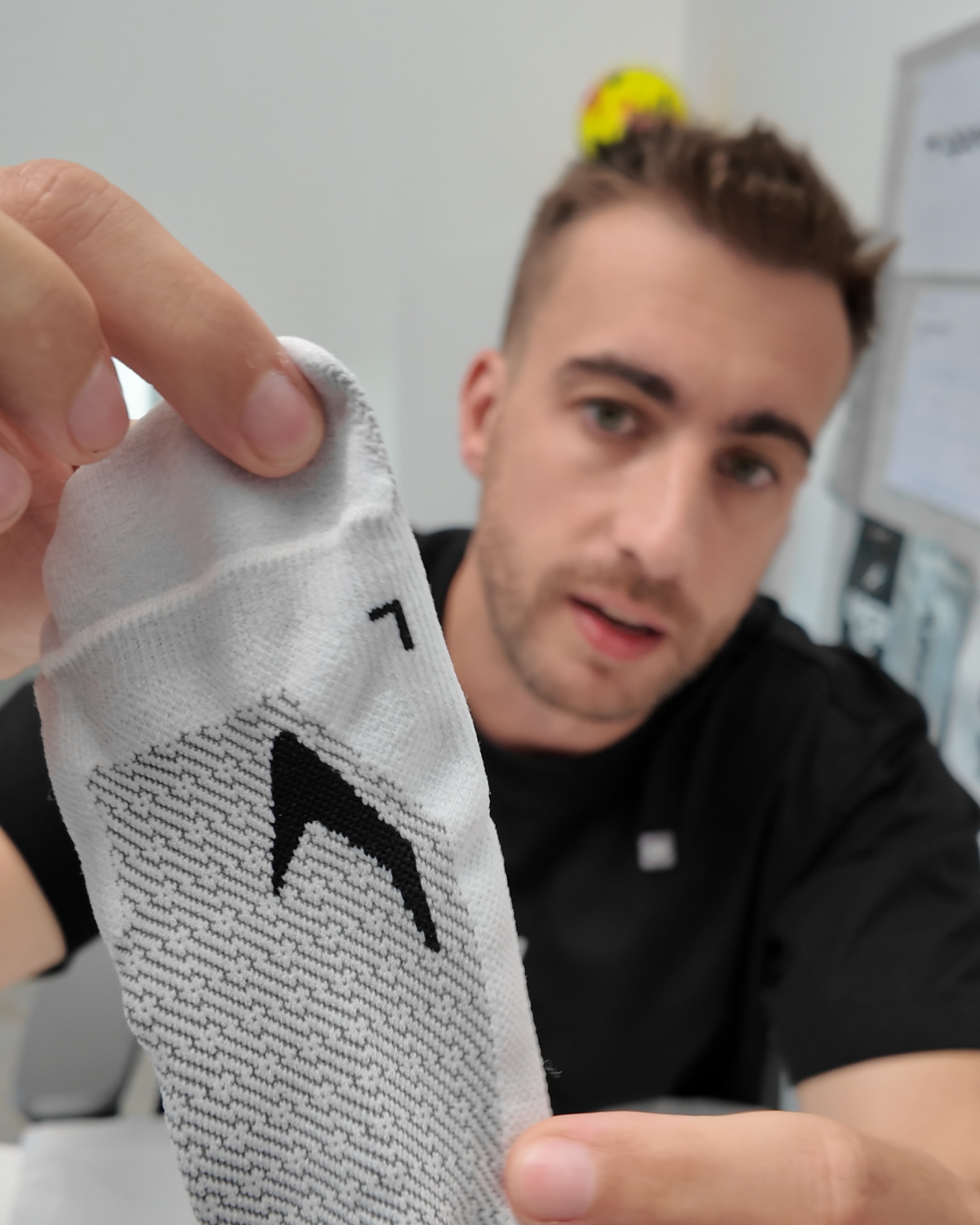
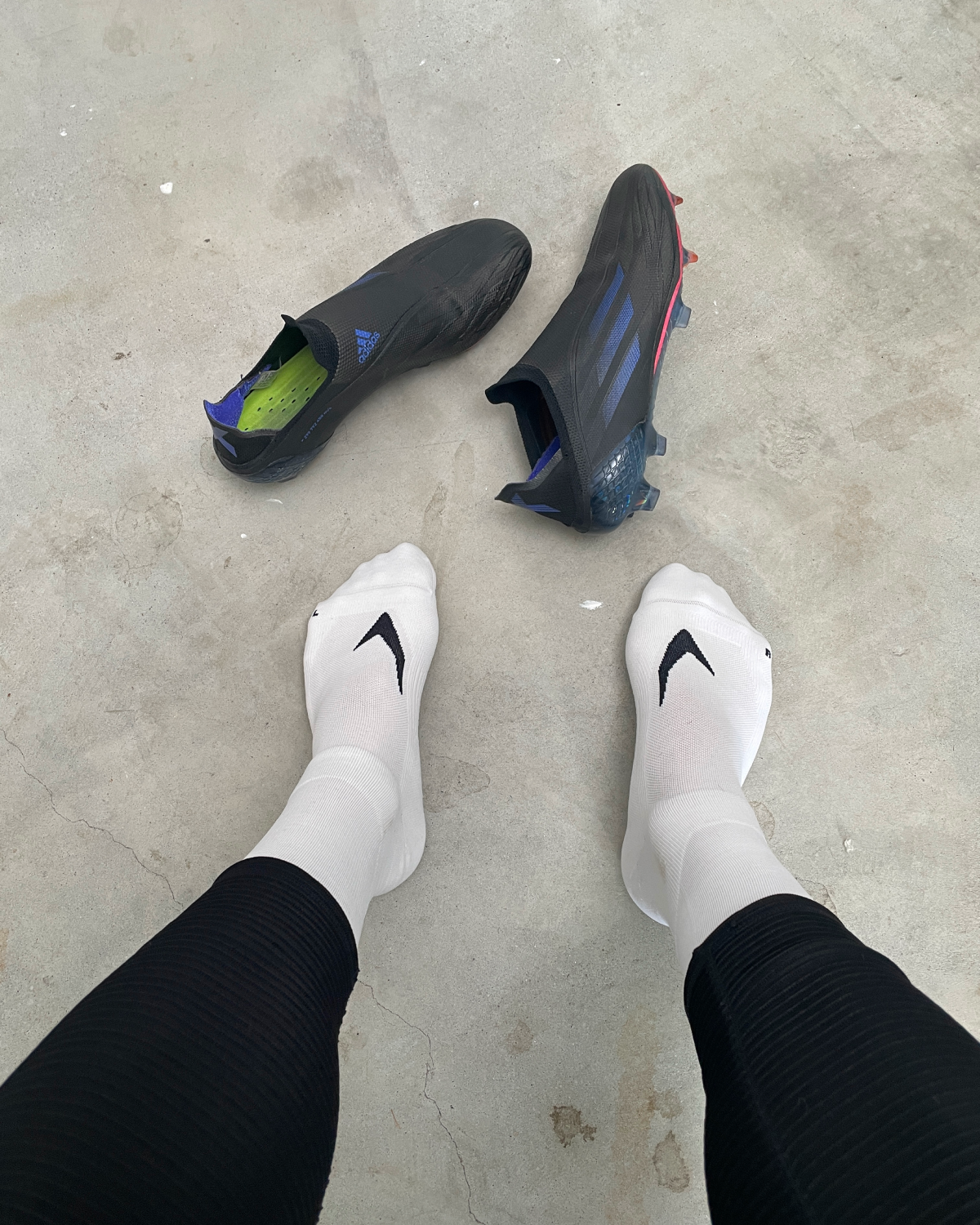
That’s why so many pro footballers wear grip socks.
By increasing friction between the foot and the boot itself, they aim to reduce internal movement during high-force actions. This helps to:
- Enhance force application consistency
- Improve stability during acceleration and deceleration
- Reduce friction-related injuries such as blisters and hot spots
- Increase proprioceptive confidence during high-speed movement
Grip socks are not a substitute for sprint training, strength development, or technical coaching. They are an interface technology - a small piece of the performance puzzle.
But in a sport where decisive actions occur at maximum velocity when you’re feeling tired late into the match, small interface improvements can matter.